EXHIBITOR DETAILS

Asahido Co., Ltd.
Company number: 1066
1-280 Kiyomizu, Higashiyama-ku, Kyoto City, Kyoto Prefecture
We have been specialists in Kyo ware/Kiyomizu ware since our humble beginnings just outside the gates of Kiyomizu Temple in 1870.Now we are pleased to be able to present to you the highest quality traditional crafts, such as porcelain, lacquerware, ironware and cut glassware that we have collected from all over Japan for you to enjoy. We recently created “Asahizaka,” a complex comprised of six separate facilities, to showcase contemporary ceramics and traditional crafts, as well as the work of young potters. We are intensely aware that the number of potteries and craftsmen is decreasing year on year throughout Japan, and we believe that we have a role to play in supporting the traditional arts. Furthermore, we believe it is our mission to preserve the delicate and intricate manufacturing spirit of Japan and communicate that to the world from here, Kyoto, this city that is so steeped in history, and which draws people from every imaginable place on earth.
PRODUCTS
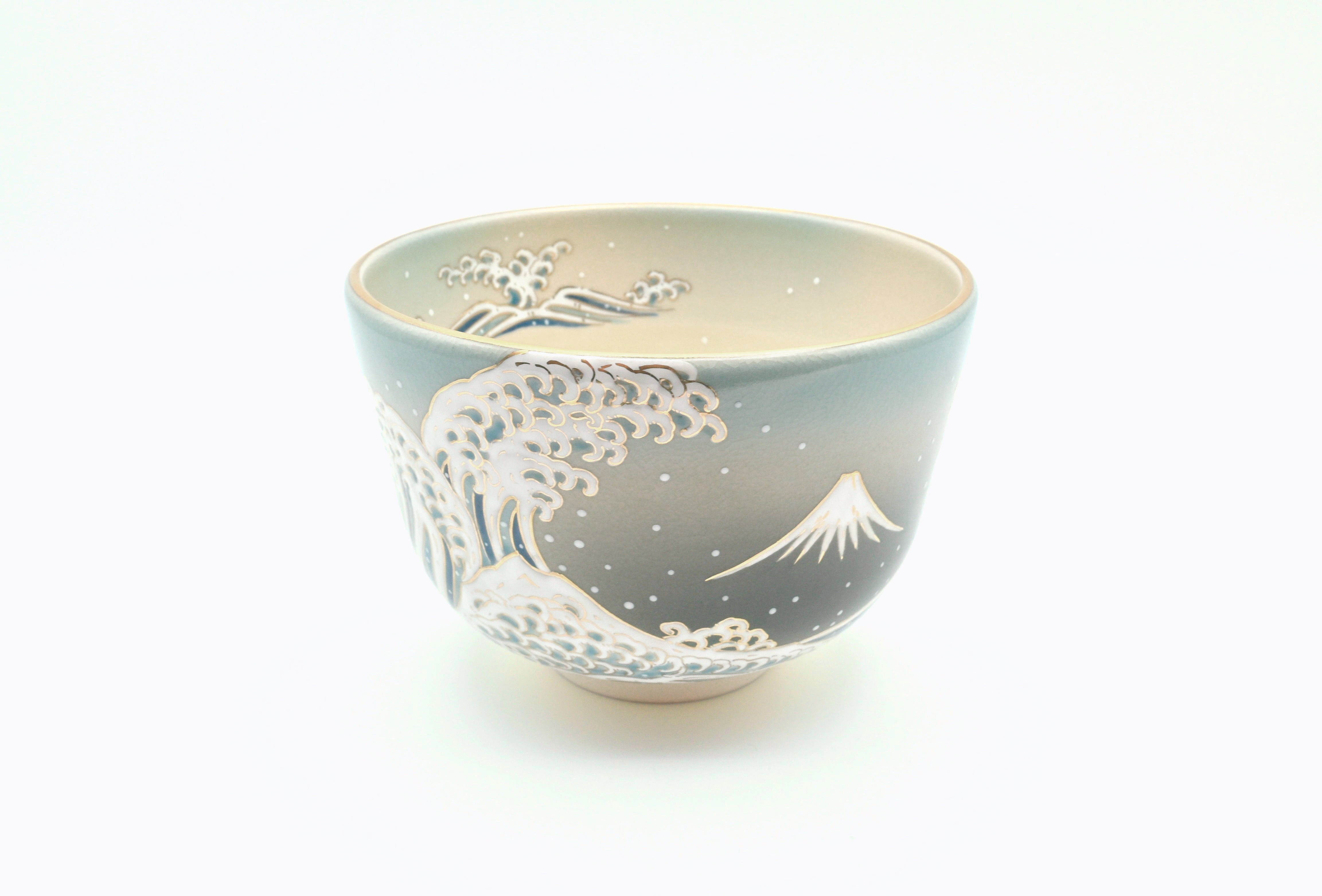
● A Rich Variety of Bowls Kyo ware and Kiyomizu ware are traditional ceramic crafts of Kyoto. In Kyoto, once the capital of Japan, techniques were gathered from across Japan. Since those were fused into its creation, there is no single style or technique. From pieces adorned with vibrant paintings and shining gold accents, to simple pieces embodying the aesthetic of ‘wabi-sabi’, to Raku ware, boasting a 400-year history and cherished by tea masters, a wide range of ceramics is produced. Works created by Nonomura Ninsei and Ogata Kenzan during the Edo period are popular even today, as representative Kyo ware/Kiyomizu ware. Those continue to be reproduced by later potters, replicating their designs and forms. Also, Many bowls feature seasonal motifs in their decoration. So, people can experience Japan's four seasons through them.
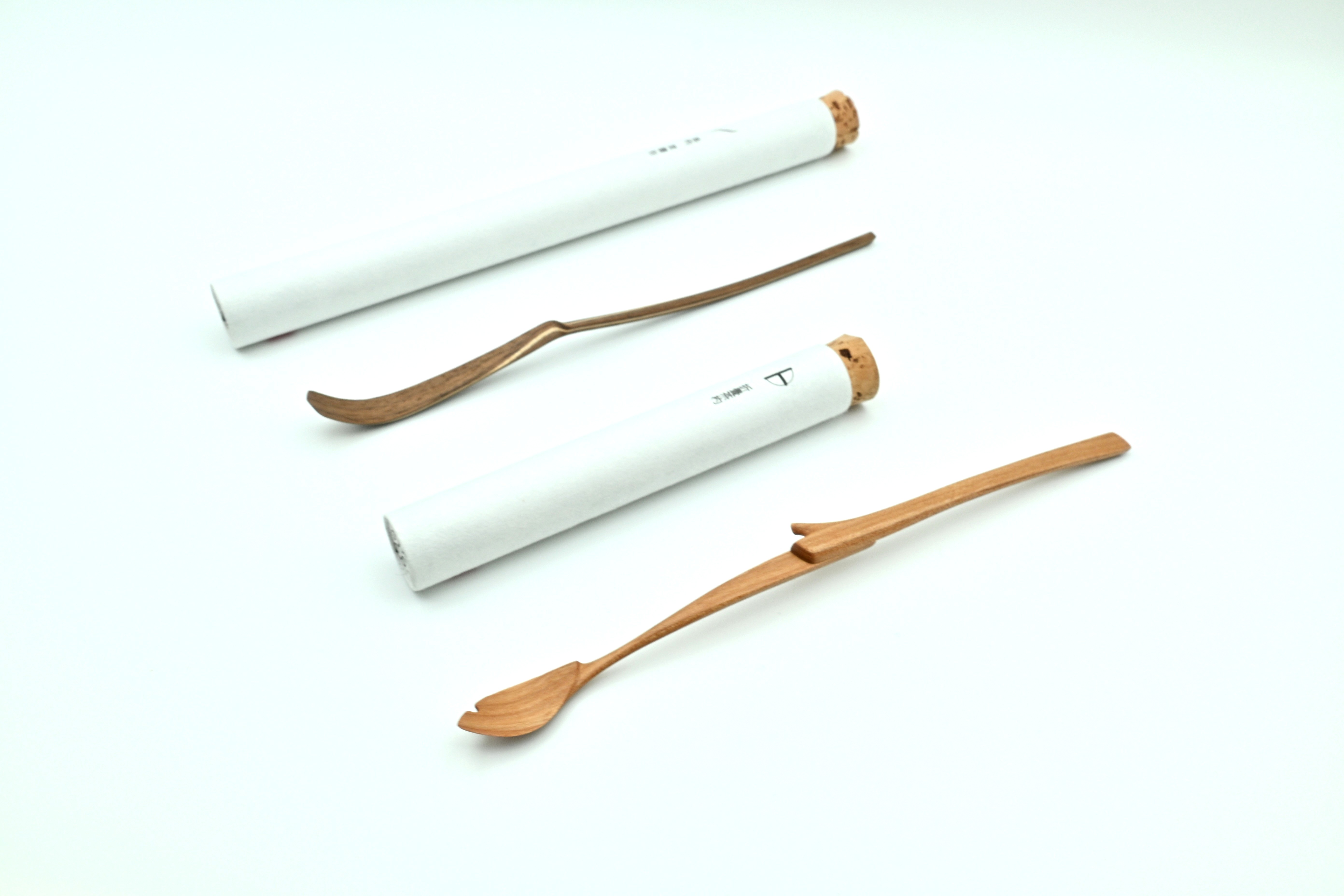
● A Special Tea Scoop with a Contemporary Design While working as a freelance furniture designer, Teruyuki Kuno applies the molded plywood techniques used in chairs to create his works. Instead of the commonly used bamboo, he uses diverse woods like cypress and walnut, crafting delicate pieces that fully utilize the natural grain of the wood. The modern, distinctive design goes well with traditional tea utensils. The leaf-shaped tea scoop’s leaf part turns green when scooping matcha. Those playful attempts are also attractive element.
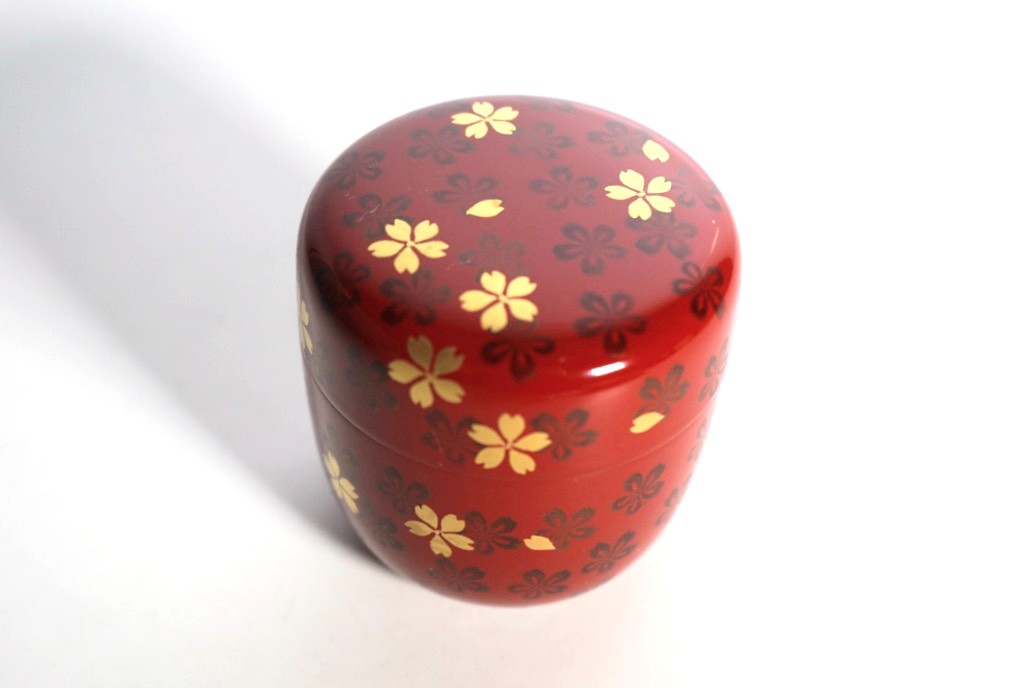
● Beautiful Utensils to Adorn Your Tea Ceremony Natsume (Tea Caddy) — A luxurious natsume with gold accents by Kaga maki-e artist Wada Juhō. After multiple lacquering processes, it achieves a beautiful, lustrous finish. Tea Whisk Rest - The Tea Whisk Rest of Kiyomizu ware by Tōsen Kiln is characterized by its soft, underglaze colors and warmth. “Yabutsubaki”, beautiful paintings with fresh spring foliage-like green gradations, is a signature design of theirs. Chasen (Tea Whisk) — Each chasen from Takayama, Nara is meticulously handcrafted, showcasing high craftsmanship and careful workmanship to enhance the flavor of matcha. Kobukusa – Kobukusa from Kitamura Tokusai Fukusaten is woven in shōhi-ori with diverse traditional patterns. They are carefully crafted to realize a gentle texture for the tea utensils. Kōgō (Incense Box) — This Kōchi-style incense box of Kyoto ware/ Kiyomizu ware is crafted by Shizukawa Ogaki.It features the Icchin technique, allowing the three-dimensional patterns to unfold in a splendid display.